Borderlands (Zev Berman, 2007): 6.5/10

The Magic Flute (Ingmar Bergman, 1975): 7/10

La Guerre Est Finie (Alain Resnais, 1966): 7/10

Speed Racer (The Wachowski Brothers, 2008): 8/10


My Photo
Name:
Location: milwaukee, wi

Thursday, June 26, 2008

Gods of the Plague (RW Fassbinder, 1970)


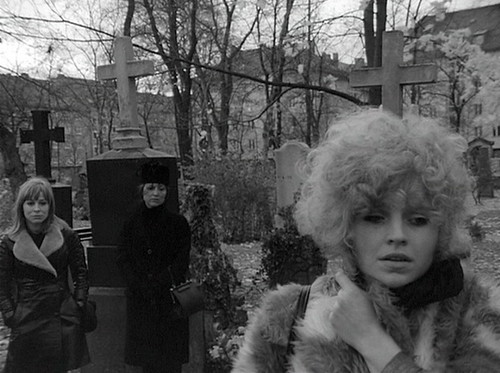
With Gods of the Plague, RW Fassbinder's sequel to his Love is Colder Than Death, the director showed that he was more than a master storyteller and atmospheric director; this is one of the first (chronologically) Fassbinder films that is absolutely gorgeous. I'm sure you could pause the film at almost any moment and have a still that's worthy of any photography exhibition.
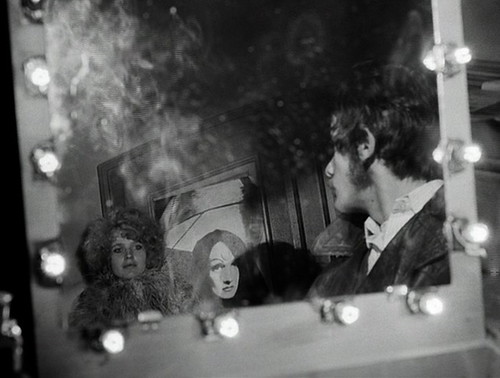


Franz is out of jail, but instead of returning to his life with Joanna, he hooks up with a beautiful young waitress he met in a cafe and goes back into a life in petty crime. Although Joanna (Hannah Schygulla, luminous as always in Fassbinder films) is the scorned lover, it's hard to feel any sympathy for her, because Franz does not try to deceive her about their relationship, yet she actively tries to destroy him anyway. The cast of petty thieves and gamblers that populate the film are at once repulsive and compelling, such is Fassbinder's gift at portraying the lower class of criminal.


But Gods of the Plague is so much more than just its plot. Every scene is a tableau of sorts, a visual playing field from which Fassbinder seems to take inspiration for the plot actions. Characters sit around in silence, walk around, stare at nothing for extended periods of time -- so much, in fact, that it seems the term ennui was derived from these aimless characters. But, as in the first scene, where Franz walks in front of a brick wall after leaving jail, it's almost hypnotic. There's nothing not visually stunning (in its own quiet way) in this film.
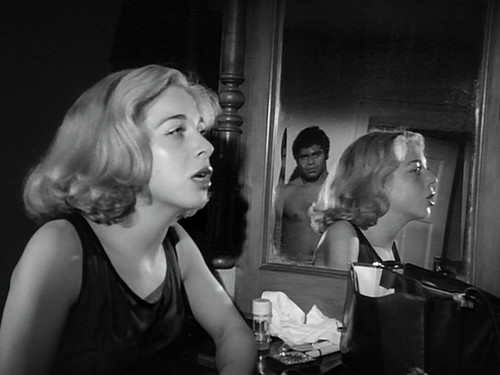


Gunther Kaufman, playing a fried of Franz's with whom he goes back into crime, has a beautiful line near the end of the film, as things are going totally wrong: "Life is precious, even right now." This could be the final line in every Fassbinder film; his recurring theme about the importance of even the smallest, pettiest life perhaps began in this film. Reccommended for those at all interested in Fassbinder's films.


8/10

Labels: ,

StumbleUpon Toolbar Stumble It!

Wednesday, September 26, 2007

Why Does Herr R Run Amok? (RW Fassbinder, 1970)


Why Does Herr R Run Amok? is truly the kind of film where it's best not to know the ending, to go through the film unsure of the point until the very end (and even then?). But, the nature of the film necessitates that any intelligent (fingers crossed) discussion of the film focus on the ending; so, if you don't mind knowing how Herr R runs amok, or have seen it, then read on. And if you do mind, go see it now and tell me what you think.

Kurt Raab plays Kurt Raab (and there's the first very interesting meta-textual bit!), the titular Herr R who has a lovely wife, a young son, and a job as a draftsman in a small office where everyone, at least on the surface, is friendly to one another. The movie is 75 minutes of Raab's life: his wife's parents come to visit, the neighbors and assorted friends come over for coffee, he works in his office, he visits his son's school, and so on. Most of these encounters are those of the most mundane order, things that we do every day and take no notice of. Fassbinder forces us to notice them, however, with his long, unbroken camera shots and unflinching eye to the small pieces that make up our lives. One particularly beautiful in its portrayal of "nothing" shot is in Herr R's office, where we see what each of the four employees (but, not suprisingly, the superior boss) are working on in pretty good detail. Herr R seems happiest, or at least happy, when he is at his job.

But while many of the scenes are commonplace, a few are so painful I almost couldn't bear to watch. When Herr R goes into the record store and asks the young, beautiful clerks if they could identify a song he heard on the radio. They start out giggling at him behind their hands, and by the end, are fully laughing in his face. The strangest thing is, he doesn't seem to notice or care. The dinner party with his coworkers is another painful event in Herr R's life that he doesn't notice; the looks on his coworkers (and especially boss's) faces when he gives a speech says it all. And when he practically begs his boss to stay and "drink in friendship" with him, it's heartbreaking.

We hear about Herr Rs on the news every once in a while, seemingly normal men who one day snap and kill their families. When Herr R does it, right after changing the volume on the tv and in the middle of listening to a neighbor speak about her upcoming skiing trip, it doesn't make any more sense than hearing about it on the news. We don't know any more about his mental state than those cases on the news, even though we have spent an hour and a half inside his world. He didn't react to the boldfaced disrespects, but snaps at nothing. It's as if he has finally had enough and lets the world know. And when the authorities come for him at work the next day, he hangs himself in the bathroom, leaving behind a mystery that no one will ever understand. Fassbinder doesn't try to solve the mystery; instead, he just shows the audience that the mystery exists. That's the mark of a genius filmmaker.

8.5/10

Labels: ,

StumbleUpon Toolbar Stumble It!

Friday, December 29, 2006

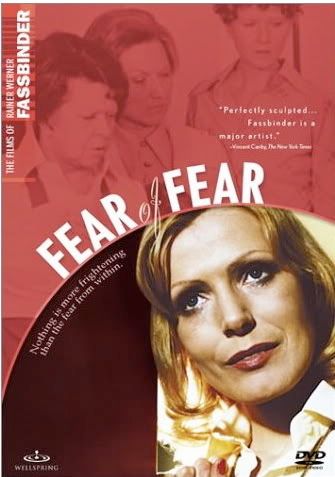
Fear of Fear (RW Fassbinder, 1975)


Fear of Fear is a TV movie made by Fassbinder in 1975, at the beginning of the height of his German popularity. The plot does indeed sound like the modern, American version of TV movies: Margot (Margit Carstensen), housewife and mother of two children, becomes increasingly bored and anxious with everyday life. She becomes convinced that she is going insane, and even submits to a quasi-affair with the doctor across the street. The whole time, no one listens to her, and everyone simply provides her with valium to relieve her anxiety. They are not uncaring (well, at least her husband isn't), it's just that this everyday world makes it nearly impossible to care deeply about someone other than oneself. It sounds like total Lifetime Channel material, but Fassbinder has this way of taking everyday melodrama and turning it into something extremely meaningful and almost universal. Nowhere is this more apparent than in Fear of Fear, one of his lesser works, but one of my favorites.

I have relatively little to say about the acting and writing, other than the fact that both are tremendously effective and moving. This film is so amazingly directed that I actually took some notes on it while watching! There are countless perfectly choreographed scenes, especially the ones where Margot bumps into the mysterious Mr. Bauer on the street. Seen from up above, the characters pass one another, and then, at the same time, turn around to look at one another. It's marvelous to see. Another pristine directing tool Fassbinder uses is the close-up shot; it is at once a glimpse into Margot's inner self, and only a longer look at the mask she wears to the world. Many of these shots show Margot's face from behind the person talking to her, so that only half of her face is visible. This ever so subtly presents Margot as only half a real person, what she is inside herself.

Fassbinder was critiqued in his lifetime by everyone: the left, the right, and especially some feminist critics. It's surprising, then, that Fear of Fear is on feminism's side! Fassbinder gives us a personal, intimate portrait of the problem without a name, the feminists' issue of the housewife with nothing to do who medicates to get rid of her problems, when all she needs is a life of her own. Fassbinder pretty strongly suggests that if Margot was able to get outside of herself, of the life that has been forced upon her, she would be happier; we see this as Margot is happiest when shopping (before she remembers herself), or drinking and listening to a record on headphones. In other words, Margot is happiest when she's not a mother or wife. She clings desperately to her daughter, but once her second child is born, she seems to drift away from them. She is constantly under surveillance from her mother- and sister-in-law, and is watched through the window whenever she leaves the house. Fassbinder, strangely enough, enumerates this feminist problem in one of the most effective, empathetic films I've ever seen.

Can you tell I miss writing papers? This movie, though, deserves this kind of verbosity; it is the stuff that essays and intellectual thought on movies are made of. Sure, there are some flaws, but none that take away from the near-perfect execution. This movie is Fassbinder, pure and simple. I don't really believe that you can love Fassbinder without loving this movie. Essential viewing.

9.5/10

RIYL: Fassbinder, Volker Schlondorff

Labels: ,

StumbleUpon Toolbar Stumble It!

Monday, December 25, 2006

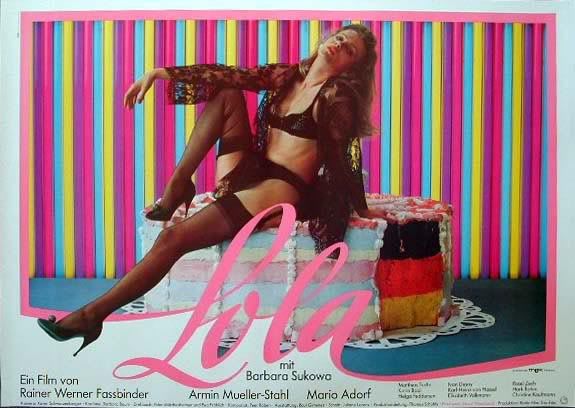
Lola (RW Fassbinder, 1981)


The third in Fassbinder's BRD trilogy, after The Marriage of Maria Braun and Veronika Voss (I actually saw a film series in order for once!), Lola is Fassbinder's conclusion of his tales of post-war German women's lives. Whereas Maria Braun is devoted to her husband and uses the post-war economy to boost her own social status and that of her husband, and Veronika Voss is more or less ruined by the fall of the Third Reich, where she was so successful, Lola represents the end of the post-war era, where women both could use and be used by the system. A revisioning of von Sternberg's The Blue Angel, Lola concerns the titular singer/prostitute who decides, even though she is kept by a very wealthy construction mogul, to seduce the seemingly uncorruptible building commissioner, von Bohm. But where The Blue Angel is interested in Lola and the professor's marriage and the professor's downfall, Lola ends just at that point, leaving Fassbinder's message very much more vague than von Sternberg's.

There are so many layers of meaning in Lola, which is typical of a Fassbinder film. Not only does Lola have a child by her brash, over-confident (representative of the previous era) lover Schukert, she attempts to win over von Bohm without revealing her profession, which she knows rightly that he wouldn't approve of. There are a few devastatingly constructed scenes where von Bohm and Schukert are talking about the same, but different, things, a perfect example of dramatic irony. Barbara Sukowa as Lola doesn't even enter into the same sensual stratosphere as Marlene Dietrich, but it's easy to see why von Bohm would fall so in love with her. By this point in his career, Fassbinder had given up on most of his reperatory players, so seeing a familiarly directed film with all these new faces is a different kind of experience. All the elements are here, but this film pales slightly in comparison to the first two, for some reason I can't quite put my finger on. Recommended, but see the other two first.

A note on the poster (straight from Robert Katz' Love is Colder Than Death): Lola was made at the time when Fassbinder was first attracting real Hollywood attention, and the film was almost called off because of a preliminary poster, which was pink and vinyl-looking. Fassbinder commented that he hoped he would never make a film that "pink," and he really didn't, but the posters tell a different story. I love the pop art, sex kitten poster, but it doesn't represent the film fairly, and I could see why such a tempestuous man as Fassbinder would have been outraged by it.

7/10

RIYL: BRD trilogy, The Blue Angel

Labels: ,

StumbleUpon Toolbar Stumble It!

Friday, December 15, 2006

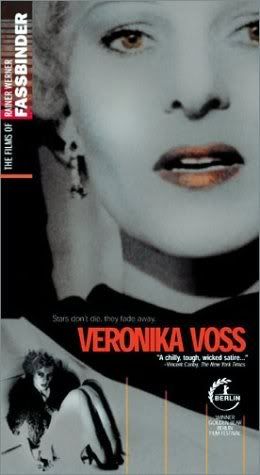
Veronika Voss (Rainer Werner Fassbinder, 1982)


The second, after The Marriage of Maria Braun in the BRD trilogy (but last chronologically, how tricky of Fassbinder!), Veronika Voss is the story of the titular faded actress, a big star during the Third Reich, but since the war, is out of work and a morphine addict. She lives with Dr. Katz, a neurologist who supplies her with morphine and sleeping pills (at a price) and has a history of getting patients hooked on morphine and signing their entire estates over to her. Veronika is no different; Katz is a really creepy character, and insists multiple times to Veronika that they are "best friends," that they'll live together in Veronika's estate. Veronika meets and falls for sports journalist Robert Krohn, who might love her back, in spite of already having a girlfriend, Henrietta. All these people's lives start to orbit around Veronika, just the way Veronika likes it, and there are tragic consequences all around.

Fassbinder based Veronika's life on that of Sybille Schmitz, a real German actress who fell hard after the end of World War II. The directing and cinematography are literally breathtaking, as the first scene on a movie set, with lights twinkling and people hurrying around, made me gasp out of its beauty. The film itself is a sumptuous black and white, and it really does feel like a film about Voss' life, not a film made in the 80s looking back at the late 40s. It is very timely, and is equally in place with Sirk's melodramas (Sirk was a great influence on Fassbinder, and nowhere is it more apparent than here and Ali: Fear Eats the Soul) and cultural critiques of post-war Germany. It is authentically German, and authentically about its time, a magnificient feat on Fassbinder's part.

Not only is it almost perfectly directed, the acting and script (although the ending is obvious, it seems more inevitable than hackneyed) are wonderful as well. In 1982, Fassbinder made his final two films, Veronika Voss and Querelle, two films that couldn't be more different. In the Fassbinder biography I'm reading right now (Love is Colder Than Death, a sensationalistic account of Fassbinder's life - needless to say, it's incredibly interesting and I will post on it once I'm done!), Robert Katz describes Fassbinder's desire to do a "hat trick": he won the Golden Bear at the Berlin Film Festival for Veronika Voss, he thought he could win the Palm d'Or at Cannes for Querelle (which I'm sure he could have if he had had studio backing behind him), and then thought he would win first prize at the Venice Film Festival for a film he hadn't even written or filmed yet, but would that summer to be ready for September. I'm sure he could have done it, and if these 1982 films are any indication, we lost Fassbinder far, far too soon. I would give a lot to see where he would have gone next.

9/10

RIYL: BRD Trilogy, Douglas Sirk

Labels: ,

StumbleUpon Toolbar Stumble It!

Thursday, December 07, 2006

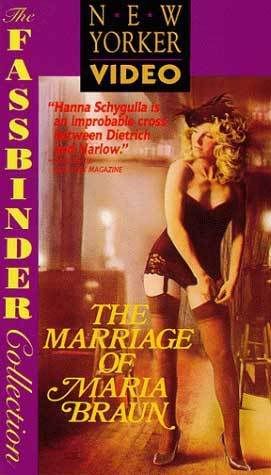
Marriage of Maria Braun (Rainer Werner Fassbinder, 1979)


The first film in Fassbinder's BRD trilogy detailing women's lives in post-war Germany, Marriage of Maria Braun is the story of, obviously, Maria Braun, who marries a Hermann in the middle of a bombing (in the stunning first scene, where Maria has to chase down an official and lay down on the ground with him to get him to sign the lisense) and has her husband immediately leave for the front. Maria is left without a husband after only half a day and a night, and supports herself and her mother and grandfather by selling illegal goods and eventually working in a bar frequented by American soldiers. Maria is obsessed with finding Hermann alive, but when she is told by a fellow soldier that he is dead, she starts a relationship with an African-American soldier, Bill, and becomes pregnant by him. Hermann then shows up, and things get even more complicated by there, with Hermann going to jail for Maria, and then eventually leaving for Canada. In the meantime, Maria gets a job with Karl Oswald, a French industrialist, and becomes the epitome of a post-war independant woman. All of this, all the things that Maria does to make her life better, however, is all for Hermann, and when she finds out his secret in the final scene, it has devastating consequences, in one of my favorite endings in a long time.

Hanna Schygulla as Maria is a wonder; one of Fassbinder's regular cast members (I love when directors do that), she portrays Maria as a seemingly strong, very sexy and resourceful, but ultimately lonely and vulnerable woman who does everything in her life for an ideal. The movie takes many twists and turns, but never seems manipulated. Instead, it is real, and these characters are all manifestations of ourselves. Maria's motivations may seem fantastical, but they make perfect sense in this crazy world that has changed so much after World War II. This is my second favorite Fassbinder (after Chinese Roulette), and a revelation of post-war Germany - compare this with Italian neo-realist post-war Italy, and you get two completely different worlds!

9/10

RIYL: Pasolini, but more lush and personal

Labels: ,

StumbleUpon Toolbar Stumble It!

Wednesday, October 25, 2006

Querelle (Rainer Werner Fassbinder, 1982)


I don't think I'm smart enough to like Querelle. Now, I'm a college-educated gal who knows her gender/sexuality issues, but the structure of the film and the issues contained therein make it harder to decipher than the normal Fassbiner film. His last film, which Fassbinder also commented was his most important, Querelle is the fusion of two important artists (Fassbinder himself and Jean Genet, whose novel is the basis for the film) and the culmination of at least forty years of thought on Fassbinder's part. As a gay man, Fassbinder made this film about queerness that is so important to him; while I understand the importance, the depth makes it hard to understand/enjoy at times.

Brad Davis plays the titular sailor, docked at Brest and finally coming to terms with his sexuality. He comes into the identity of a gay man with violence - his first gay experience is with a man who he subsequently murders. He becomes embroiled in gay life in Brest, including with Nono, the owner (along with his wife Lysiane, played by Jeanne Moreau) of a brother where Querelle's brother frequents (and is also Lysiane's love); Gil, a man who murders out of pride and eventually falls because of Querelle; and Lieutenant Seblon, Querelle's superior who is desperately in love with Querelle and eventually becomes the center of all these stories. The story is told in a stage-like way, with obvious sets and props. There is no real attempt at realism, and some of the dialogue is taken directly (I assume) from Genet's novel. The scene with Querelle and his brother fighting is especially opaque, as they speak to each other in philosophies while brandishing knives.

This movie is a deeply intellectual, obviously meaningful movie to Fassbinder, but it is too steeped in philosophy and Genet's original work to be incredibly enjoyable to me. The mix of the high-minded ideas with crude language is sometimes effective, other times painfully pretentious and awkward-sounding. While I understand its importance, I cannot say I loved it, and that's the conundrum of some of Fassbinder's films. Recommended, but not without these warnings. By the way, I love this Andy Warhol poster based on the movie. One of the better posters I've ever seen.

6/10

RIYL: R.W. Fassbinder (his other films are the only things I can find to compare this to)

Labels: ,

StumbleUpon Toolbar Stumble It!