A few short ones
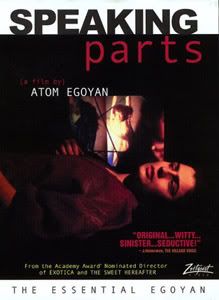
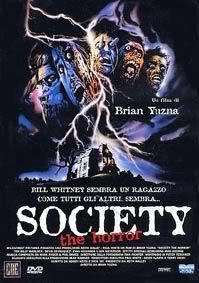
 The Promotion is in limited release right now -- I was lucky enough to catch it, and can't recommend enough that you do the same. Seann William Scott plays Doug Stauber, an all-around nice, normal guy who is an assistant manager at a Chicago grocery store. He works hard, busts his ass, and has a wife with whom he's hoping to buy a house and start a real life with. Doug is finally in line for a promotion to manager at a store that's opening up across town. Enter Richard Wellner (John C. Reilly), a manager from a Canadian sister store who is up for the job as well. Richard is a good guy as well, with a kid and a wife and a troubled Canadian past. Both men need this job in order for their lives to get out of their respective ruts, so, they begin competing more and more ruthlessly. This film, more than probably any other I've ever seen, shows what happens when good people do bad things. There are moral consequences, but they're both hilarious and not overdone. Doug and Richard are completely people we all know; their flaws are both very funny and very sad. The second half of the film, especially the scene where Richard tapdances to unliscensed 80s rock on a motivational tape. You have to see it to understand. Do see it. Extra fun fact: the movie was filmed very near the apartment in Chicago where i lived for 6 months! 8.5/10  Beware: Children at Play would have been just another mediocre-to-bad-yet-enjoyable Troma film if not for its plot. It's probably the only B-horror movie of all time to have a main plot point be based on the plot of a classic of English-language literature. Yes, this film is about a gang on children who are kidnapped (sort of) from a small Bible-thumping town and are taking revenge on the adults, but these kids are also abducted and kept in line through the Beowulf myth. Seriously. The main evil child, Glenn Randall, has fashioned himself as Grendel to a group of outcasts who have turned into cannibals. Is this all too ridiculous to believe? It almost is, but the incredible weirdness of the plot makes it a little smarter than your average bad movie, and more worth checking out. 7/10  A feminist classic? Maybe. Interesting to watch? Definitely, up to a point. I'll explain the film like this: once, a friend compared herself and I to Czech and French New Waves. She has adventures, can talk/write at length about almost anything, and has a sometimes bizarre or surreal sense of humor. I like to brood, smoke, and talk about how bad I feel. She's the Czech New Wave, and I'm the French. Czech filmmaker Vera Chytilova's movie doesn't make much sense, but it's not supposed to. Two girls named Marie (although I could have sworn one was named Julie?) decide to be bad, because society is bad. So they go on dates with old men, march around looking for attention, and finally trash a banquet hall (with a food fight that made me a little squeamish). They're both incredibly gorgeous (with amazing clothes, if that matters to anyone but me), and Chytilova's direction can be really remarkable, especially when she experiments with colors. But other times, I got the feeling it was surreal to be surreal, with no real point or redeeming value. This is grating. The film should be seen by those who are interested in the progression of global feminism in film, but don't expect, uh, a plot. Or characters. Or any traditional moviemaking techniques. 7/10 Labels: 1966, 1989, 2008, mik cribben, steve conrad, vera chytilova |
 Stumble It!
posted by dana at 11:15 PM
0 comments


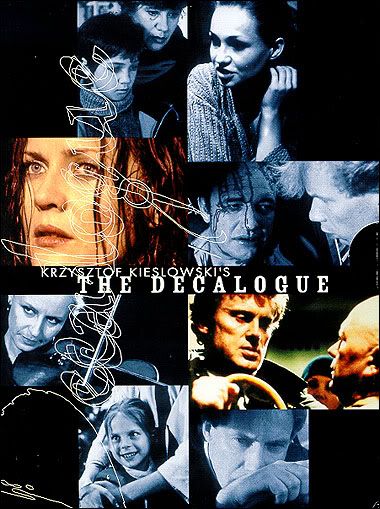
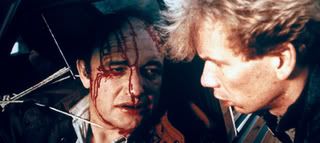 Decalogue 5: Thou shalt not kill. Kieslowski's only overt political statement of the series lies in this anti-death penalty piece. Instead of giving a total picture of a murderer, we see the few hours before the crime, during which the young man is mostly silent and isolated, but tries to reach out to the outside world (throwing the food at the little girls, to their delight) with little success. The crime is done, then the film cuts to after the trial, right before the execution. There is an idealistic young lawyer who has his whole livelihood put into question through the verdict, and the young killer who just wants to be buried in his family's plot. An incredibly realistic, humane portrait of the justice system. There are no judgements on Kieslowski's parts, just facts and people.
 Decalogue 6: Thou shalt not commit adultery. Along with part 5, part 6 was made by Kieslowski into a slightly longer film for foreign distribution; I can see why, as these two are the parts with the most universal storylines. A young man spies obsessively on his neighbor and falls in love with her. When he finally gets his chance to be with her, he realizes love (or lust) isn't as ideal as he had thought. Kieslowski uses a potentially creepy situation to illuminate the fact that life is almost never what we think, which can be both a good and a bad thing. The acting in this one is the best of any of the films, provoking empathy on my part.
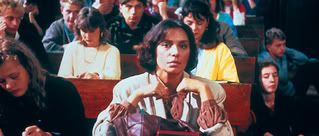 Decalogue 8: Thou shalt not bear false witness against thy neighbor. Perusing the imdb message boards (a frequent vice of mine), I found that part 8 is generally the least favorite of those who have seen the series. I think the story is the most compelling, for certain: an ethics professor is confronted by a ghost from her past, the grown-up version of the little girl who she sent to almost certain death during the Nazi occupation. Most of the tales are surprisingly optimistic at their ends (Kieslowski sees the glass as half-full!), but none more than this one. The two women talk, and the professor gains peace of mind, as she had always wondered what happened to that little girl, and the visitor regains confidence in the good intentions of mankind. I was struck by how the moment portrayed in the film was definitely the defining moment of both characters' lives, trumping that moment forty years ago.