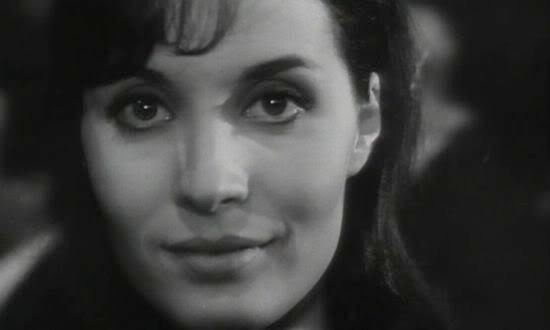
Borderlands (Zev Berman, 2007): 6.5/10

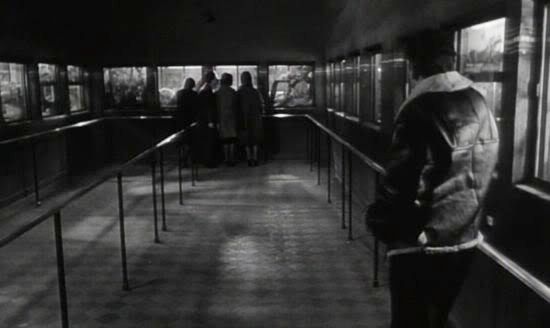
The Magic Flute (Ingmar Bergman, 1975): 7/10

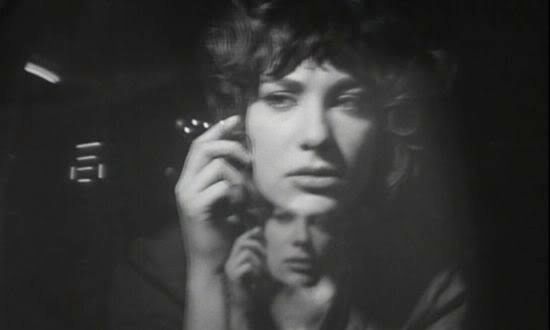
La Guerre Est Finie (Alain Resnais, 1966): 7/10

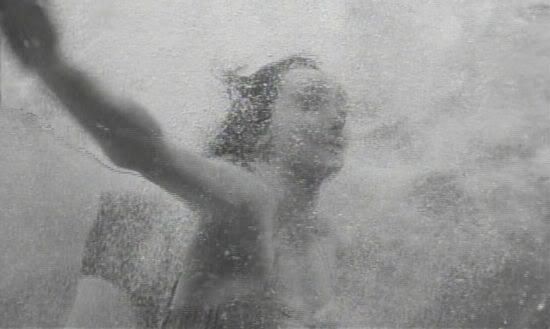
Speed Racer (The Wachowski Brothers, 2008): 8/10


My Photo
Name:
Location: milwaukee, wi

Monday, February 18, 2008

3 quick ones


You know, this wasn't actually that bad. Especially if you fit one or both of these qualifications: you can see bad horror movies in the theater and generally be entertained (especially if you are with a friend who gets scared easily), and you like Jessica Alba. Thankfully, I am in both categories. There are actually some pretty good jumps, and creepy imagery. Obviously, there could have been more, but for a PG-13 horror movie, you really couldn't do too much better than this. Well, you probably could. But still.

5.5/10


The Experiment, based on the Stanford Prison Experiment (even though a confusing screen at the beginning says it's not based on anything whatsoever), starts out really tense and enjoyable. Twenty men volunteer to take part in a psychological study where 8 are made prison guards and 12 are prisoners for 14 days. Things start lightly enough, with the prisoners making fun of the guards, but when everyone starts taking their roles seriously, things go really wrong. The first half of the film is intense, especially when you consider that this is a German film, and the Germans have an interesting (to say the least) history with follow-the-leader mentality. But the second half just goes over the top and loses its grip on reality. Sure, it would be less spectacular if things didn't become so explosive, but it also could have been more of a creepy, subtle character study.

6.5/10


Considered to be Fellini's masterpiece, I was a little...underwhelmed. It's not that it's not a great movie, because it is. Rather, I found myself less emotionally invested in these shallow people than in, say, Nights of Cabiria. Marcello Mastroianni is predictably fantastic as Marcello Rubini, a jaded gossip journalist who wanders around 1960 Rome, cheating on his suicidal girlfriend with a friend and then a Swedish actress (even though they don't really speak the same language). You can't take your eyes off of Anita Ekberg as the actress, but you don't feel for her, either. I did, however, find the last half hour incredibly depressing and touching; Marcello has lost touch with any sense of humanity he might have had -- is it the soul-crushing nature of his job, his alcoholism, his inability to be faithful to one woman, or something else? Certainly a film that has to be seen, but let me down a tiny bit.

8/10

Labels: , , ,

StumbleUpon Toolbar Stumble It!

Tuesday, January 15, 2008

Les Bonnes Femmes (Claude Chabrol, 1960)


That poster prepares you for a summery romp with some girlfriends. The director, Claude Chabrol, prepares you for a mystery, as most of his films (none of which I have been particularly enamored with so far) have been tense, Hitchcock-ian thrillers. The first half of the film prepares you for an exploration of the lives of 60s Parisiennes, all seeming shallowness. But nothing in Les Bonnes Femmes prepares you for the sum of its parts, a feminist (?!) commentary on the lives of young girls in Paris that even has a murder in it, and ends on an incredibly depressing note.


Click on the picture to see my entire post of stills.


Jane, Jacqueline, Ginette, and Rita are Parisian shopgirls who live apparently different, but essentially the same, lives. Jane (seen above, played by the stunningly beautiful Bernadette Lafont) is a party girl, and in the first scene, takes Jacqueline with her while she goes to a restaurant, a nightclub, and eventually, the apartment of two creepy strangers. Maybe they're not so creepy, though -- in the first scenes, they seem that way, but as the movie goes on and we're introduced to more men, they're more annoying than anything else. Ginette lives with Jane, and has a secret life as a nightclub singer. Rita is a normal girl who is trying to escape the banality of the shopgirl life by marrying up in class, even though her husband-to-be is snobby and condescending (so are his parents -- in one great moment, Rita meets his mother, who is wearing a giant diamond ring outside of her gloves. "I would have worn it on the inside," she says, "but it was just too big."). Jacqueline believes in true love, and is being followed around town by a man on a motorcycle by whom she is equally afraid of an intrigued by.


Men are terrible, pretty much. Jane bounces between men, using whomever she can to buy her a drink and give her a good time. This was the beginning of the 60s, and girls had the choice not to believe in love, and to believe in themselves instead. This implied promiscuity is not what makes Jane's (and Ginette's) life so unfulfilling; instead, it's the life in the store (9am-7pm doing nothing, it seems), the way men don't take her seriously (no didn't always mean no quite yet), the way everything in the world is set up for a different person than her. The first half of the film is quite boring, but on purpose. It's boring because these girls' lives are boring. I love the tactic of making a film boring on purpose to make a point.


But then Jacqueline meets the man on the motorcycle, and the film's tone changes significantly. (If you haven't seen the film but want to, here's where I suggest skipping to the end of the review) He seems sent from heaven at first; he saves the group from the two creeps at the public pool (by the way, why aren't there pools open until all hours of the night here?) and takes Jacqueline on a romantic motorcycle ride into the country and out to dinner. That's where things start to take a sinister turn. He begins acting erratic and weird during the meal, and during their walk afterward, tries to warn Jacqueline that he might not have been following her out of pure love. Jacqueline, being pure of heart and completely naive, replies that she doesn't have any money, what else could he want from her but love? Now, it seems ridiculous that a girl would completely trust and fall in love with a guy who has been following her around for days, but Jacqueline is so desperate for attention and love that she will take anything that comes her way. And she dies for it -- not, I think, as punishment, but as what Chabrol sees as the obvious ending of a life that's been taken for granted. Jacqueline's death is sad and scary and shocking, but it's not surprising. And that's the worst part.


The film ends with another random girl, waiting on the side of the dancefloor for a man to get her. We never see the man's face, and the girl looks directly at the camera, confronting the audience in our participation and voyeurism in this episode. Who would have thought such a striking attack on the Parisian status quo and feminist statement would have come from Chabrol? By far my favorite Chabrol film, and one of my favorites of the French New Wave. If I were teaching a feminist film class, this might be one I would start with.

8.5/10

Labels: ,

StumbleUpon Toolbar Stumble It!

Saturday, June 16, 2007

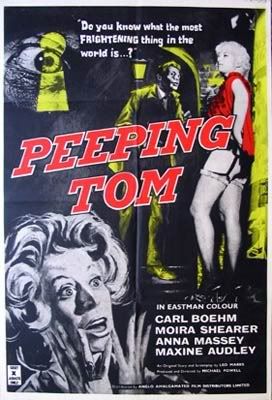
Peeping Tom (Michael Powell, 1960)


In today's film climate, it's hard to conceive of a film ending a director's career for reasons other than commercial failure. But Michael Powell's career did effectively end with Peeing Tom, his 1960 thriller starring Carl Boehm as a would-be filmmaker who literally kills with his camera. A review on IMDB compared the furor over this film to that if, today, Steven Spielberg made a graphic film about pedophilia. The film, even today, is shocking in its stark portrayal of obsession and violence, even though there is nothing gory about it.

Boehm is stunning as Mark Lewis, a pathologically shy young cameraman who dreams of becoming a filmmaker. His young neighbor Helen enters his life on a whim and becomes enamored with him, allowing him to let his guard (and camera) down in some situations, but he becomes more obsessed in others. In his secret life, Mark has been killing women and filming their moment of death. Through archival footage of his own family, we find out that Mark's father (played by Powell), a scientist, did cruel and disturbing experiments on the nature of film on his son as a child, something that profoundly scarred the man. The more we find out about Mark, the more we deeply pity yet despise him, a paradoxical mix of emotions that muddles what might otherwise be a clear-cut moral story.

Peeping Tom was released the same year as Psycho, which became the more famous of the films. Hitchcock was hailed while Powell was shunned. But looking back on the two films today, because of Tom's obscurity, it still retains a definite shock value, and leaves the viewer unsettled, whereas Psycho has become ingrained in popular culture so that its shocks mean nothing anymore. Powell, one of the finest filmmakers of his generation, made a daring and brilliant film, full of horror and beauty (the colors and overall cinematography are stunning), that deserves to be seen.

9/10

Labels: ,

StumbleUpon Toolbar Stumble It!